Hal Gye (22 May 1888–25 November 1967)

Australian cartoonist/artist Harold Frederick Neville Gye was born today at Ryde, New South Wales in 1888.

Hal Gye by David Low

New Zealand cartoonist David Low wrote about his friendship with Gye and writer C. J. Dennis in his autobiography, Low's Autobiography.

"Hal was a fantastic chap, thin, with long hair parted in the middle, a way of waving his arms about and an irresistible wit. When he wasn't drawing theatrical caricatures for the Bulletin, or illustrating Den, he was painting water-colour symphonies with a dreamy effect which he produced by losing his temper with them and putting them under the tap. After the second jet of water the picture almost disappeared leaving plenty to the imagination, which pleased mightily those who had the imagination. Den's chief claim to fame at first was that he was the author of the Austrabloodylaise, a vernacular piece known far and wide in Australia, of which the opening stanza gives the flavour:

Fellers of Australia, blokes and coves and coots,
Pull yer bloody pants on, tie yer bloody boots.

But he was then deep in the planning of a volume, The Sentimental Bloke, which was to bring him wide fame and an honoured place in Australian poetry. Meanwhile Den filled in as a civil servant complete with two-inch starched collar and vest slip, an effect quite unsuited to his bony-nosed Roman face.

Here were a couple of characters in whose company I found rest and understanding. We could laugh, shout, sing, exult, mourn, curse the wrongdoer in the open, as we wrestled with our work. (I was always one to talk to my work as it came out on my old drawing-board perched on a broken arm-chair.) Our trio expanded into an odd mixture of fellowship. Painters, poets and writers, of course, actors, farmers, civil servants, business men, politicians, an occasional Cabinet Minister, and on one red-letter day even Melba herself, the immortal song-bird. All I remember of her was that she was a bullying woman who ate a good deal and swore a lot. It was all one. Even on the blackest days I found relief in that pool of goodwill. In no other company could I ever have tried the experiment of sharing a studio. I have had many since, but all by comparison have had a touch of loneliness."

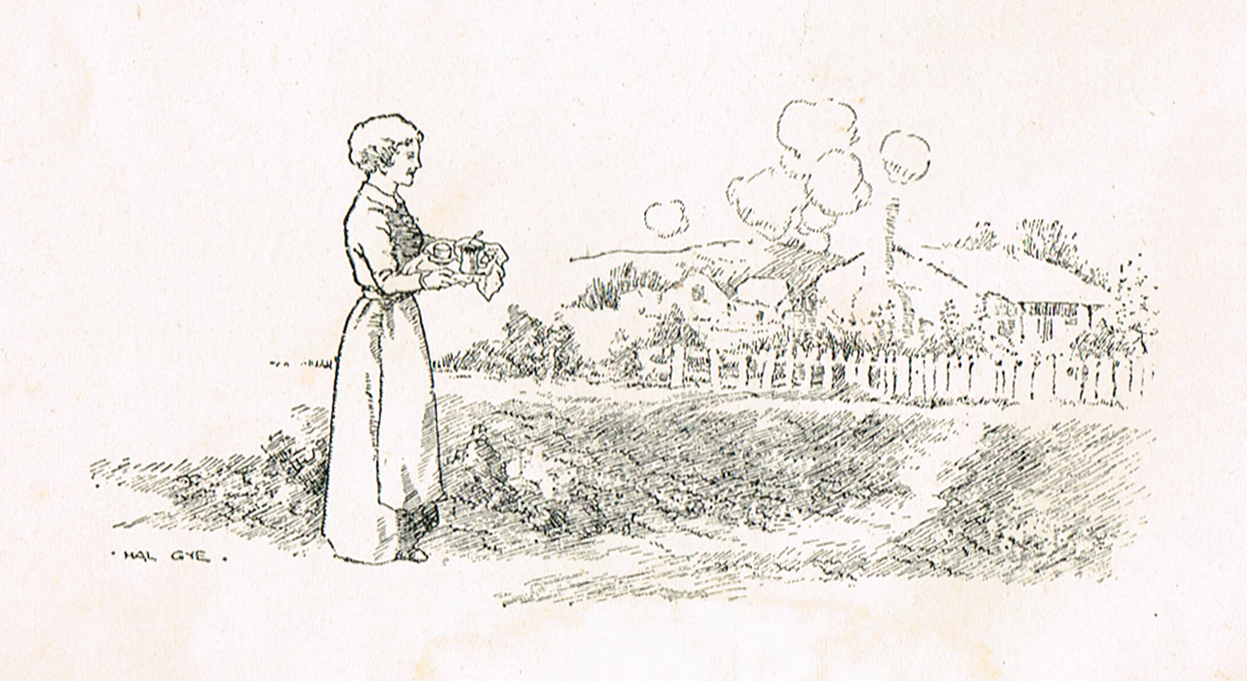
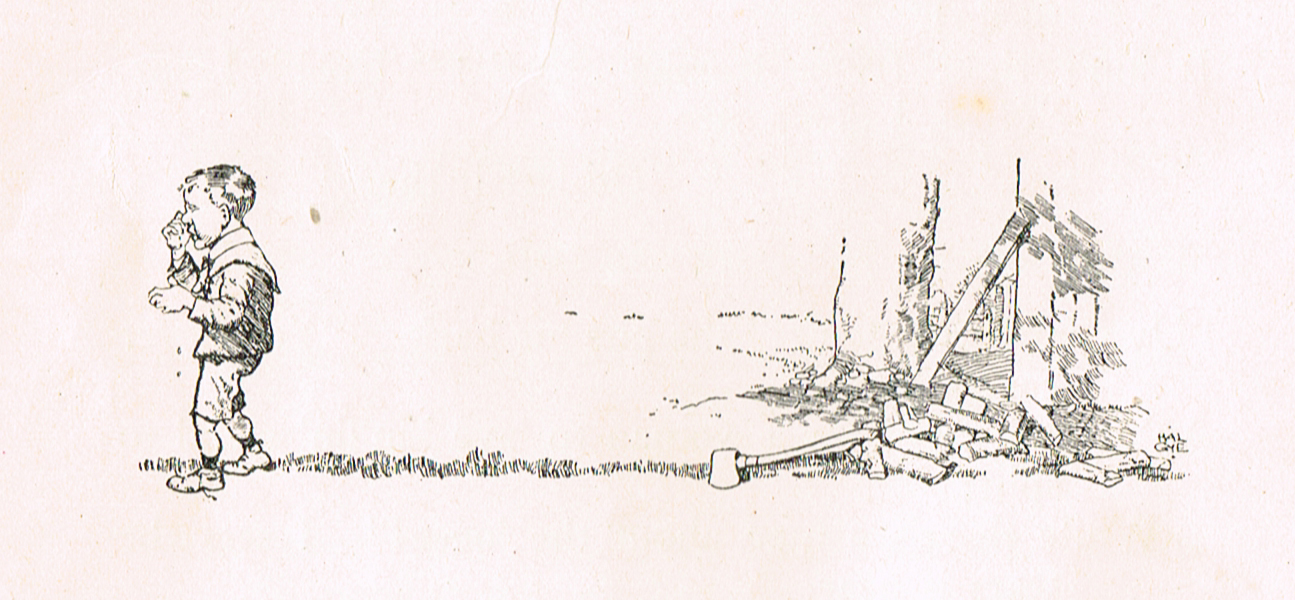
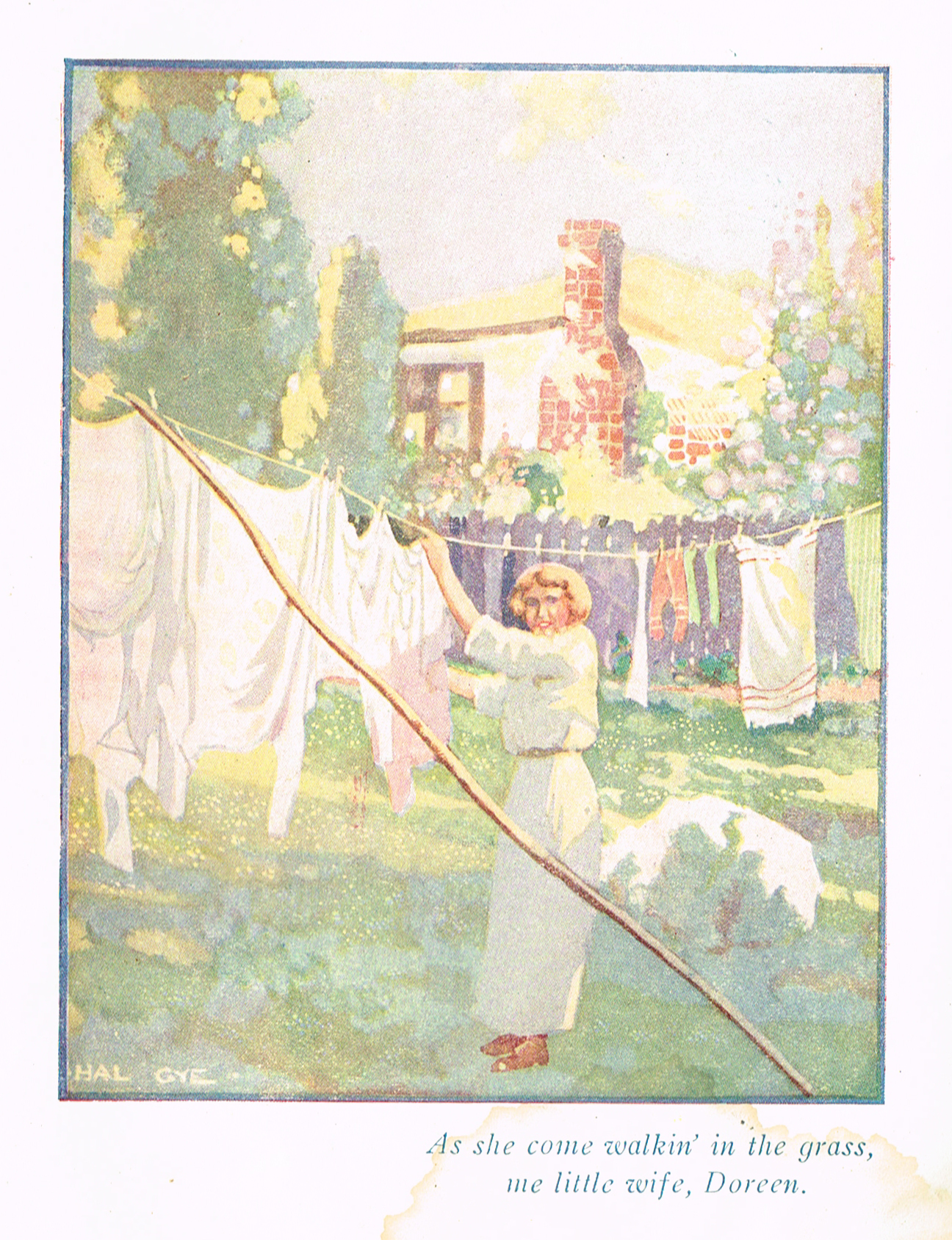
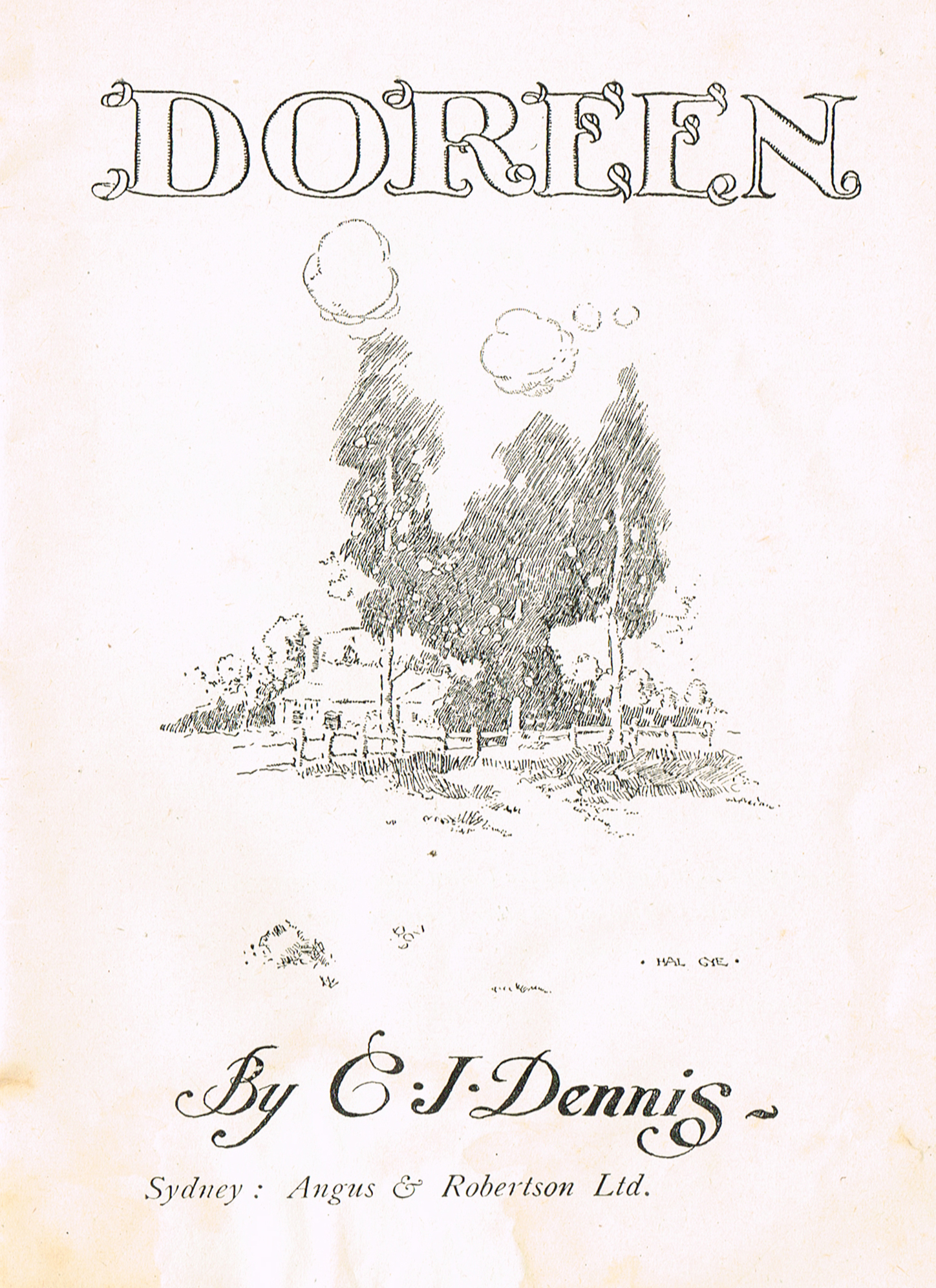
Below: Hal Gye illustrations for C. J. Dennis' Doreen.
2.jpg

Low illustration and biography excerpt swiped from Percy Middlemiss' excellent Matilda blog which has many samples of Gye's art and biographical notes.
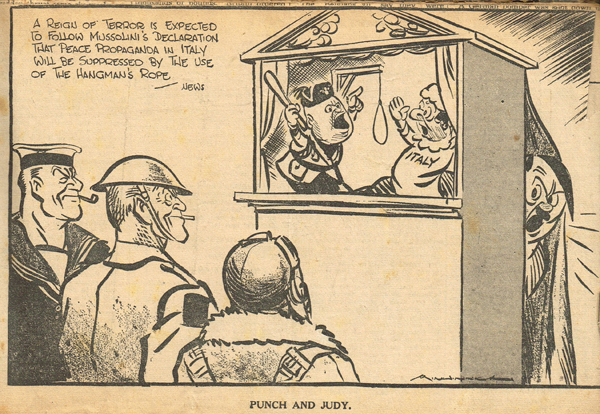
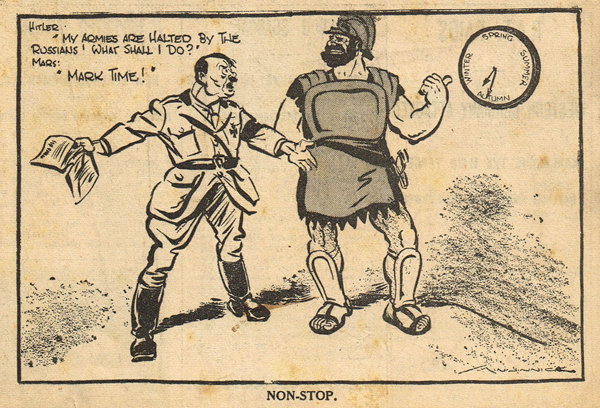
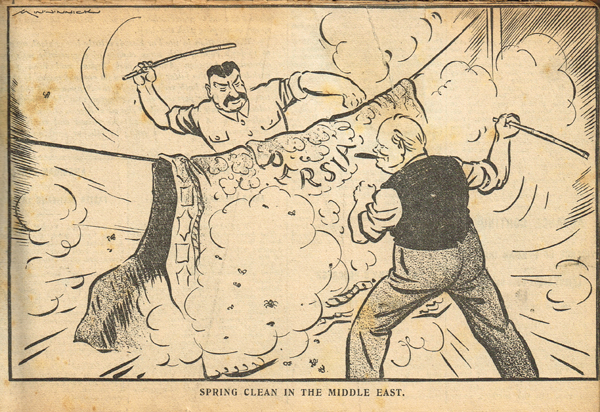
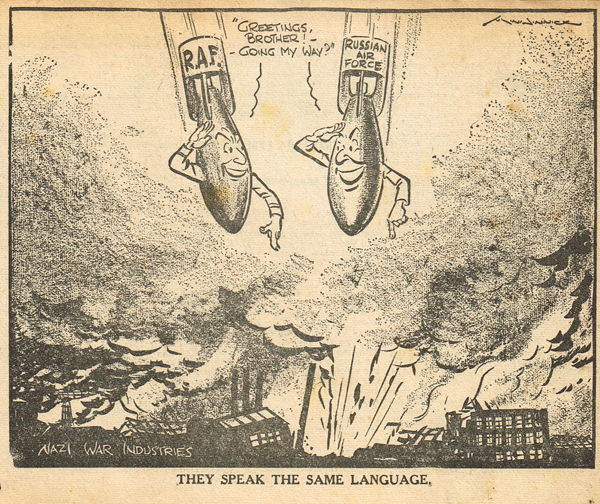
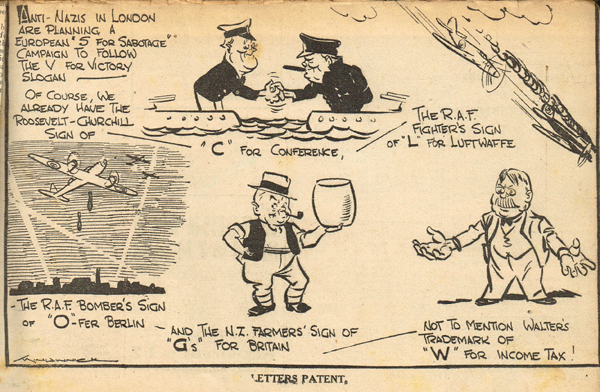
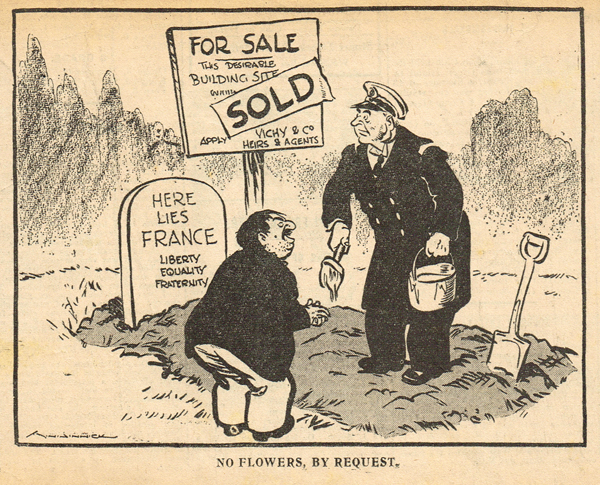
Minhinnick Wartime Cartoons

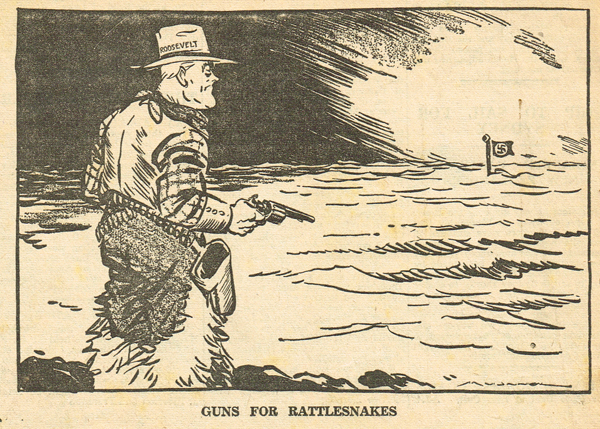
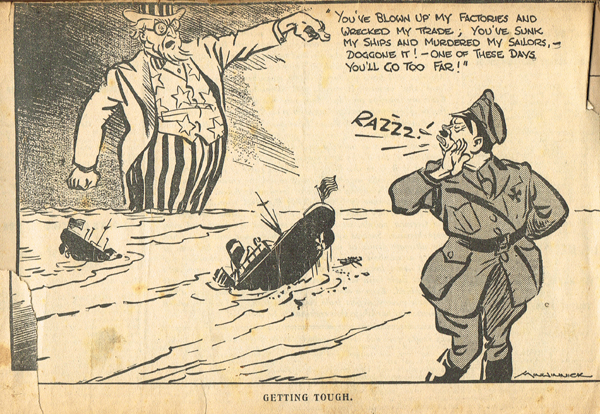
Selection of New Zealand cartoonist Sir Gordon Minhinnick's wartime cartoons from the Evening Standard. Minhinnick (13 June 1902 – 19 February 1992) had selections of his cartoons collected in annual books although many now exist only as yellowed newspaper cuttings. Through a combination of cartooning techniques Minhinnick took aim at the Axis Alliance, my favourite being the 'silent' cartoons that occasionally featured Mars, the Roman God of War, and no dialogue save a caption or title within the cartoon.

The Cartoonists Part 2

The several page article 'The Cartoonists' appeared in the weekly New Zealand Heritage magazine published in the early 1970's and eventually collected as a set of Encyclopedias.

Read The Cartoonists Part One

Les Gibbard

The easy, deceptively casual style of Les Gibbard's cartoons with their minimal captions seems to place much more than a century between him and the skilled academic artist Arthur Palethorpe, whose drawings in the New Zealand Punch, of Wellington, are among the first which can properly be called cartoons. Even in "colonial" clothing, Palethorpe's figures were formal and wooden, and some unconscionably long captions were needed to put across his jokes.

Palethorpe's wit is of interest, though, in that as long ago as 1879 it took a favoured New Zealand form—the pun.

"If I go spinning yarns among silks and satins I am sure to be worsted." Teacher: "What is wax?"

All: "A soft substance."

Teacher: "Is any wax not soft?"

Pupil (with modesty) : "Them as you gives us when we don't know our lessons M'm."

A wince to every page. Yet 70 years later the pun was still humouring New Zealanders. In the Otago Daily Times of August 20 1951, Keith Waite marked the wreck of the former inter-island ferry Wahine near Timor as she transported troops bound for Korea: a soldier leaning over the rail of the grounded ship says to another—"Yer can't really blame her—she's used ter running inter-islands!"

David Low (1891 - 1963), from a photograph by Karsh of Ottawa. Low was knighted the year before his death.

With few exceptions the cartoonists of the late 19th century were anonymous. Their work was inferior to Palethorpe's—which is to say, very inferior—except for J. H. Wallis (c. 1880) who could caricature a face but was inexcusably careless about the rest of the drawing. Although some of them tried to distinguish their characters as New Zealanders pictorially, they failed to do so in their captions. These showed all too clearly the Englishness of the journal from which they were pirated.

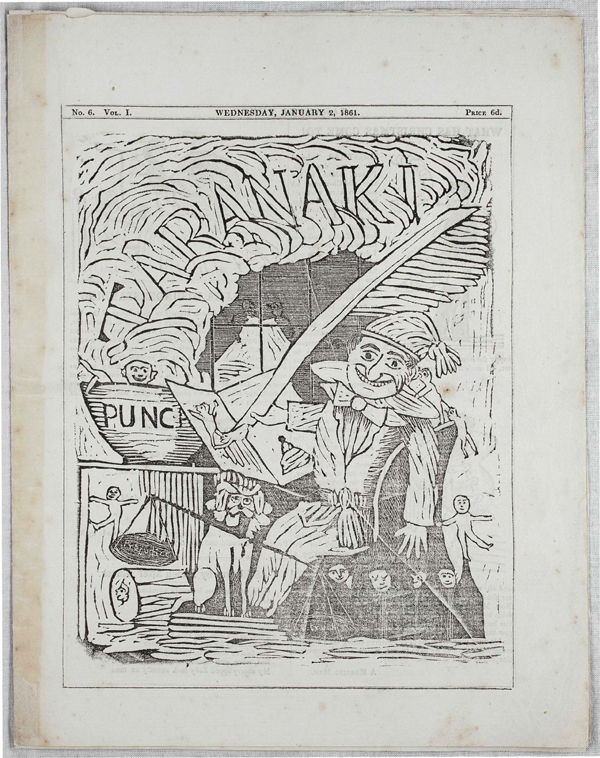
Woodcut cartoons from the Taranaki Punch - ARC2002-538 Taranaki Punch, Collection of Puke Ariki, New Plymouth, New Zealand.

The daily-paper cartoon had not then arrived, and cartoon humour appeared only in periodicals patterned on Punch and usually bearing its name. The New Zealand Punch was markedly the best of four which appeared for varying periods—usually short—in the four main cities. The Auckland Punch, for example, was abysmal, though one of its rough unsigned cartoons in the issue of August 19, 1865 shows that New Zealand egalitarianism is not a recent phenomenon.

Foreigners often remark on that attitude, with cause. New Zealanders have built a welfare state and a largely classless social order on the premise that Jack is as good as his master. In so doing they have robbed the cartoonist of some handy stereotypes. Low's trade-union draught-horse would be possible in New Zealand; never his Colonel Blimp.

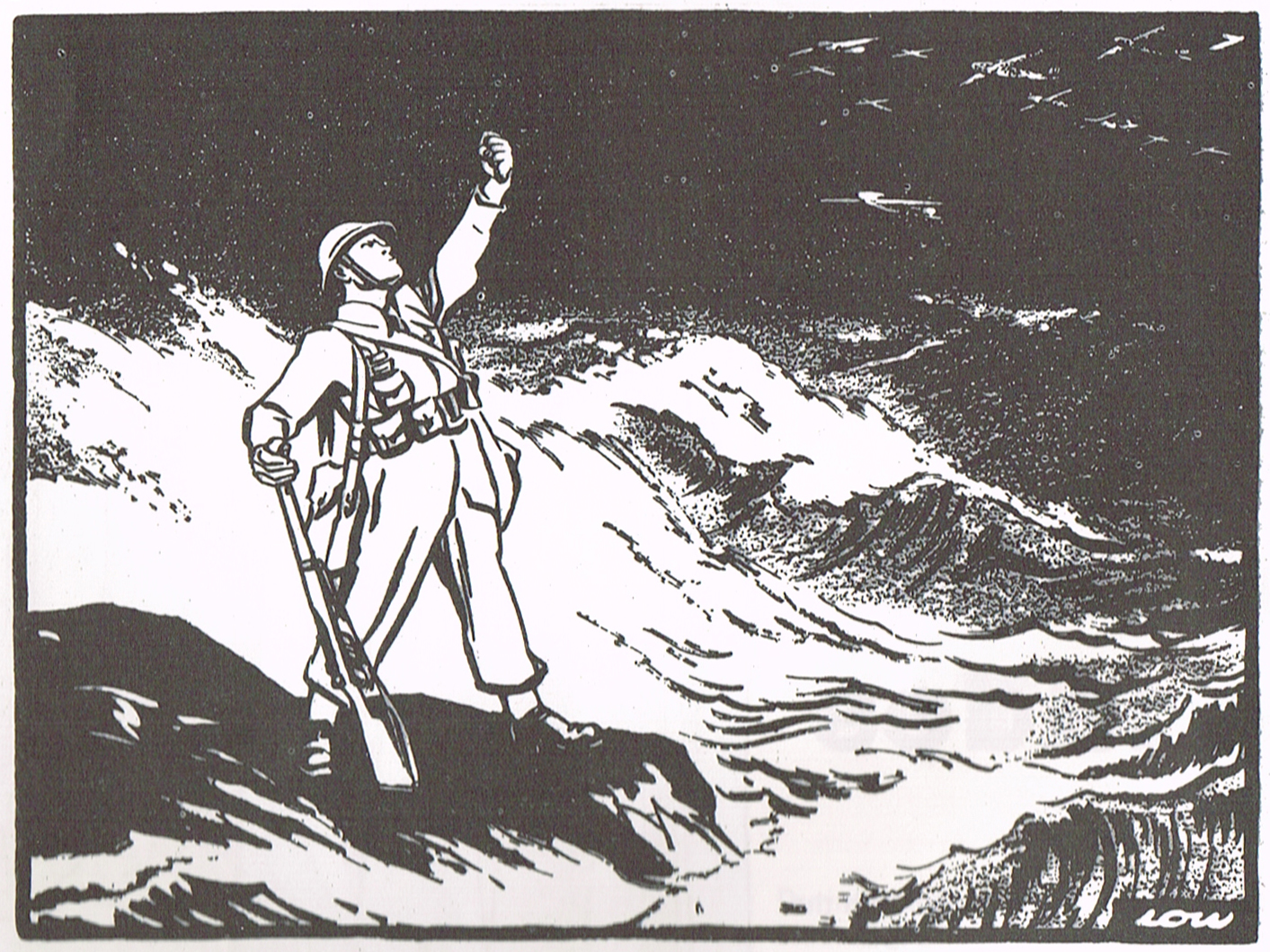
"Very Well, Alone", probably Low's most famous cartoon, was published at the beginning of the Battle of Britain in 1940.

New Zealand's cartoonists have not wasted tears on the difficulty. They simply cultivated (in earlier years) the personal and individual art of caricature, and searched always for a Mister Average, a Common Kiwi, who would be the prototype of the overtaxed, downtrodden, put-upon, unassertive, wife-ridden ordinary man.

A. S. Paterson cartoon featuring Little Eric of Berhampore.

Sir Gordon Minhinnick's John Citizen

In Minhinnick's work this character appears as John Citizen, a mild fellow commonly seen as a bemused observer of events contrived by politicians and others for his discomfort. In A. S. Paterson he is Little Eric of Berhampore. In John McNamara he is a young Maori (occasionally labelled "NZ") at times sitting on the sidelines, at other times engaged in some activity related to the main theme but taking the form of a sub-cartoon. In Sid Scales he appears as a "typical" long-nosed, genial, carelessly groomed male who could reasonably be labelled Joe Blow.

Nevile Lodge, the Evening Post cartoonist, focuses similarly on a "middle" New Zealand couple, yet claims to have sought consciously for a "class" character to give edge to his work. "In drawing the domestic situation," he has said, "I use a middle-class sort of person—not because it's the way we all are, but because you get more pomposity among those living on the fringes of the filthy rich. I think it's better to make fun of somebody who thinks he's a little better than the average."

"Colonel Blimp", the figure invented by Low in the 1930's to satirise the British Establishment.

Last Four Days To Pre-order #takedown - My evening on a pier with pick up artists and protesters by David Blumenstein

Big thanks to all the folk who have pre-ordered #takedown - My evening on a pier with pick up artists and protesters by David Blumenstein. David's comic is at the printers right now and we'll start mailing out pre-orders over the weekend.

If you havn't pre-ordered yet, get on it now! Take advantage of our pre-order $2 postage to anywhere in the world! Here it is!

Here's that spiel one more time,

What are pick-up artists really like?

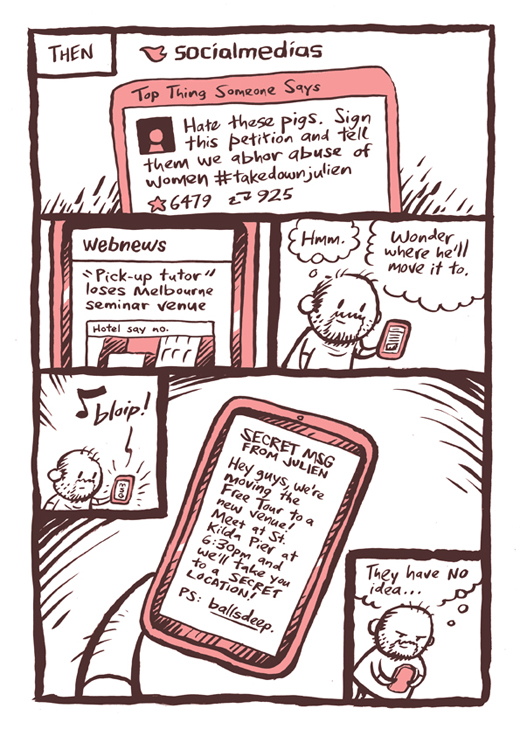
Cartoonist David Blumenstein wanted to know. In signing up for a free seminar with International Pick-up artist(PUA) Instructor Julien Blanc, David found himself witness to one of the most successful anti-PUA campaigns launched by the feminist community, a campaign that rallied behind the catch-cry #takedownjulienblanc.

This playfully drawn true account of one evening introduces you to the people on both sides of the protest line.

David Blumenstein is an award-winning cartoonist who has drawn comics for Guardian Australia, Crikey, Junkee and Australian MAD Magazine. He and his cartoonist wife, Sarah, are co-founders of Squishface Studio, an open comic artists' studio in Brunswick, Victoria which you can visit most days of the week, and which holds events and classes for kids and adults.

The David Blumenstein site