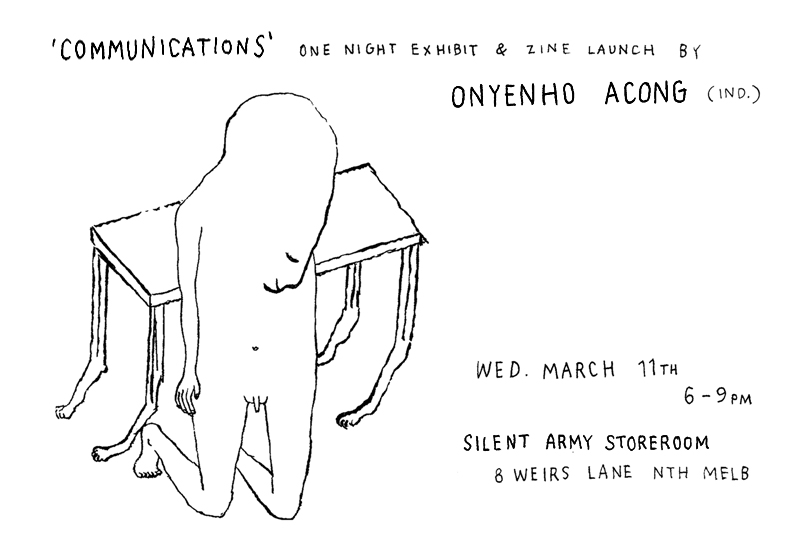
This Wednesday at Silent Army Storeroom: Communications - Onyenho Acong

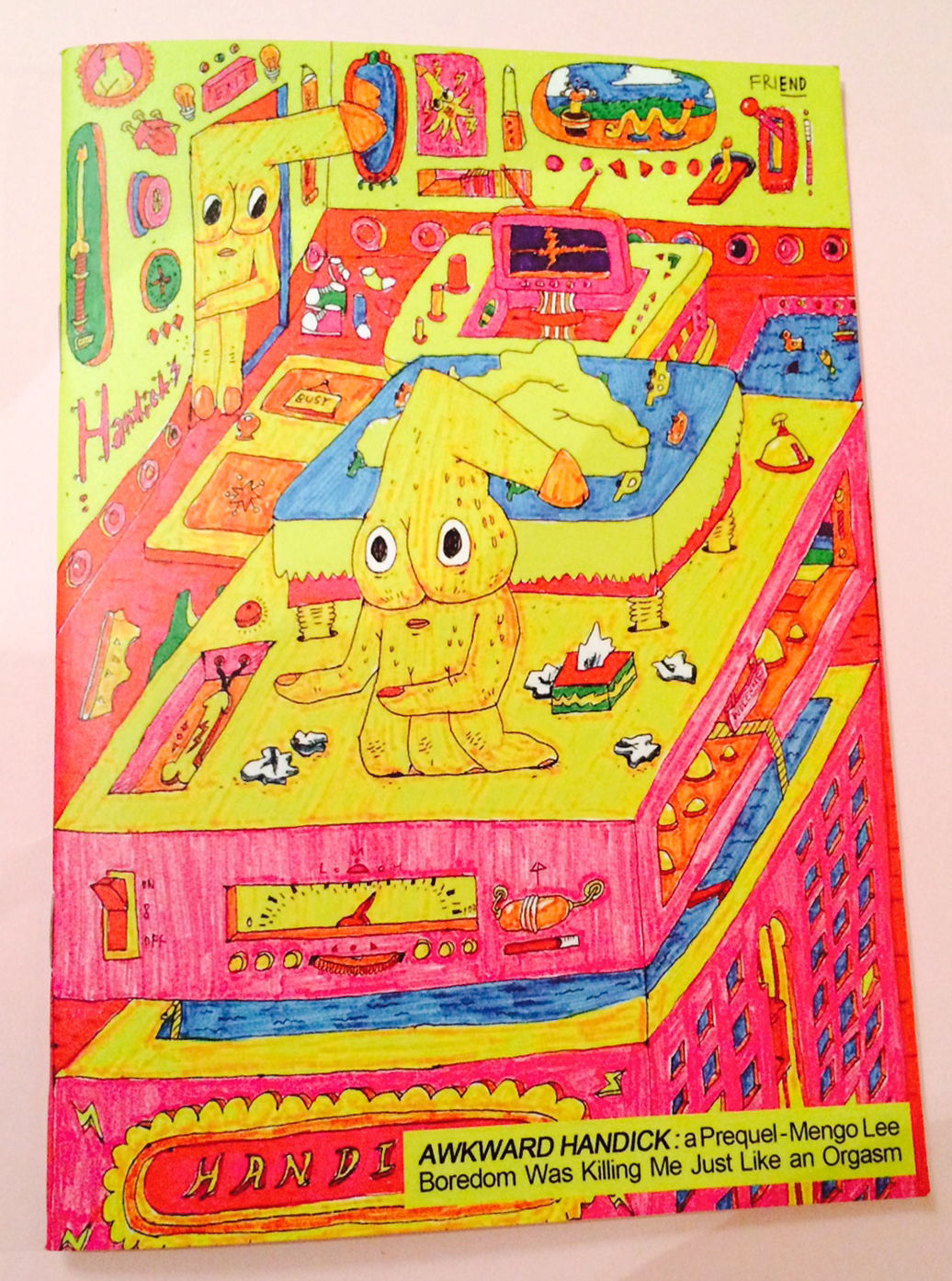
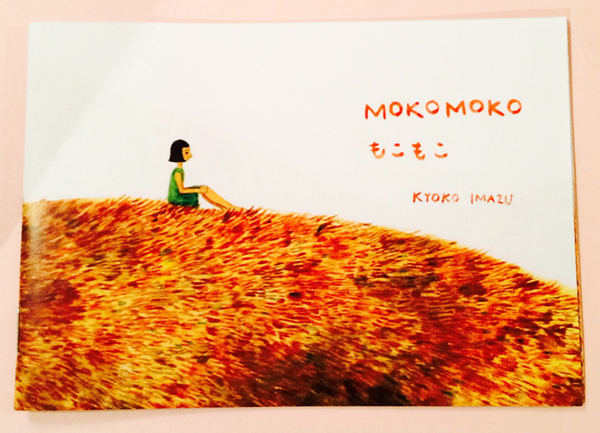
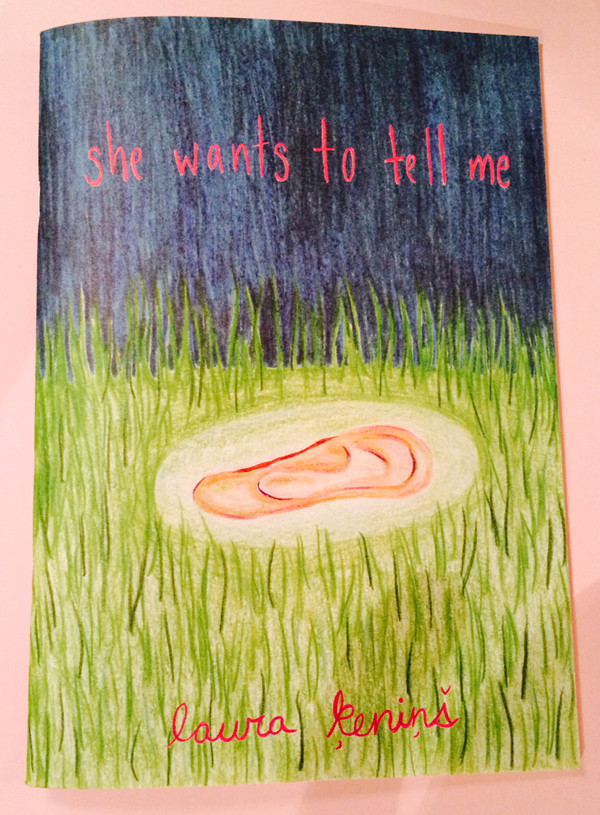
Silent Army Impresario Michael Fikaris launched a new Silent Army comic studio last month in a new location at 8 Weirs Lane in North Melbourne. This Wednesday night the Silent Army Storeroom hosts a one night exhibit and zine launch by Indonesian artist Onyenho Acong.

I asked Michael a few questions about things in a dashed off cavalier fashion,

Matt Emery: Hey! How was the launch of the new Silent Army Storeroom? I wanted to come but had tickets in advance to see Steve Malkmus at the Melbourne Zoo. It was an okay gig, I think he was a little reserved because of the family audience. No mention of love children in Geelong this time.

Michael Fikaris: It was perfect, thanks. Many familiar face, some new ones and all happy in the service.

Emery: Can you tell me about Onyenho Acong? How did you meet this artist person?

Fikaris: Onyenho and I met last week matched up to collaborate on FCAC Jogja. We really got along and did about 20 cartoon/hanging pieces in the show and I asked him if he would be interested in making a zine and displaying some other stuff Northside in my space. Come have a look! He's funny and hard working - my type of artist.

Emery: Will there be any more Dailies anthologies?

Fikaris: Done with the Dailies for now - spreading it more for the meantime, Bird Cage Books.

Emery: Apart from the Pikitia/Retrofit/Kilgore event that can't be spoken of yet can you talk a bit about other things that are happening at the Silent Army this year?

Fikaris: The next launch is a collaborative zine of comics and drawings with my old pal Nelio. It's some abstract pieces combined with a print from each of us. He will be here for a big exhibition and will do a launch with the storeroom. After that is a few things, from some artists you would know and some you may not. Stay tuned!

Emery: What are you working on personally art-wise at the moment?

Fikaris: I am working on a few things locally and abroad this year. Putting time aside to focus on comics a bit more but still poking my head out the door to lick the walls. Will maybe send some of the comics to other specific people if I find the gall as I have still not done that yet.

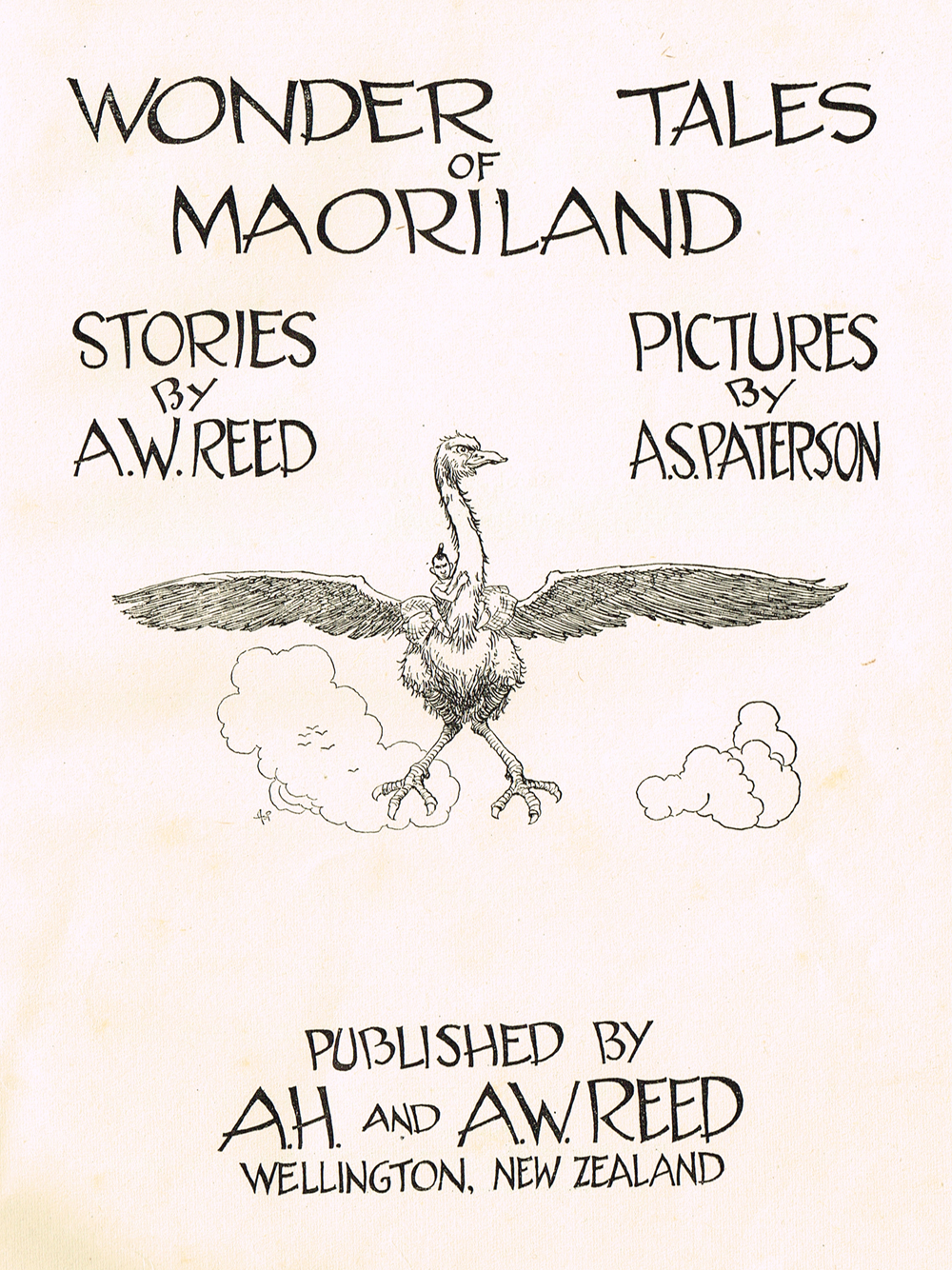
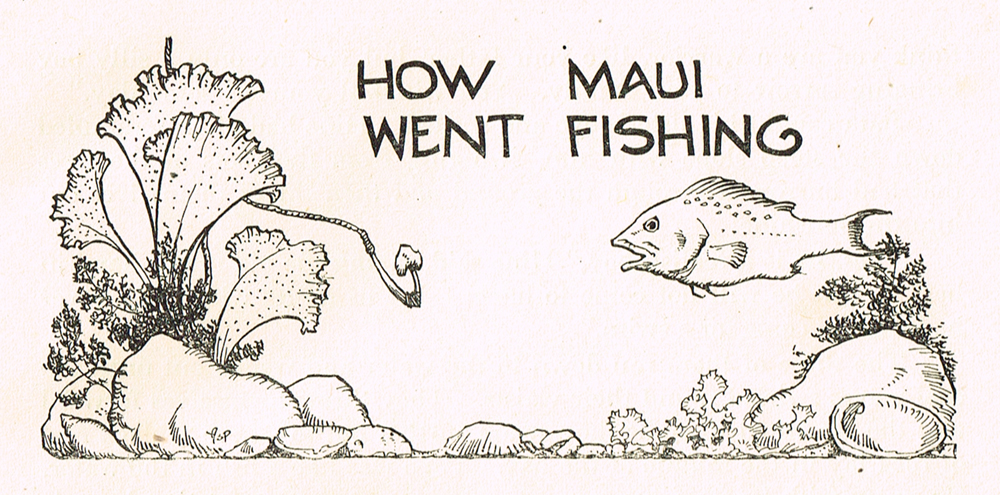
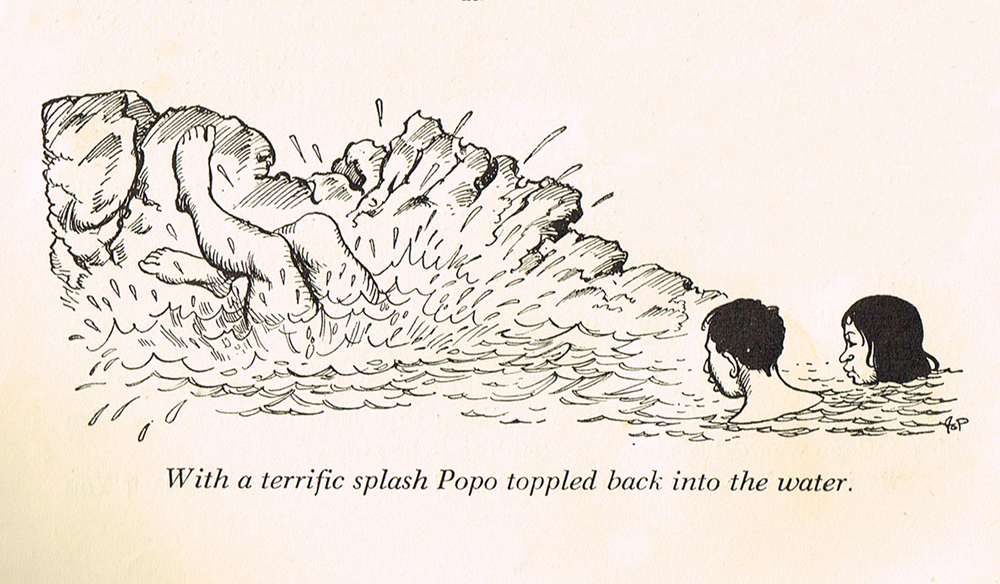
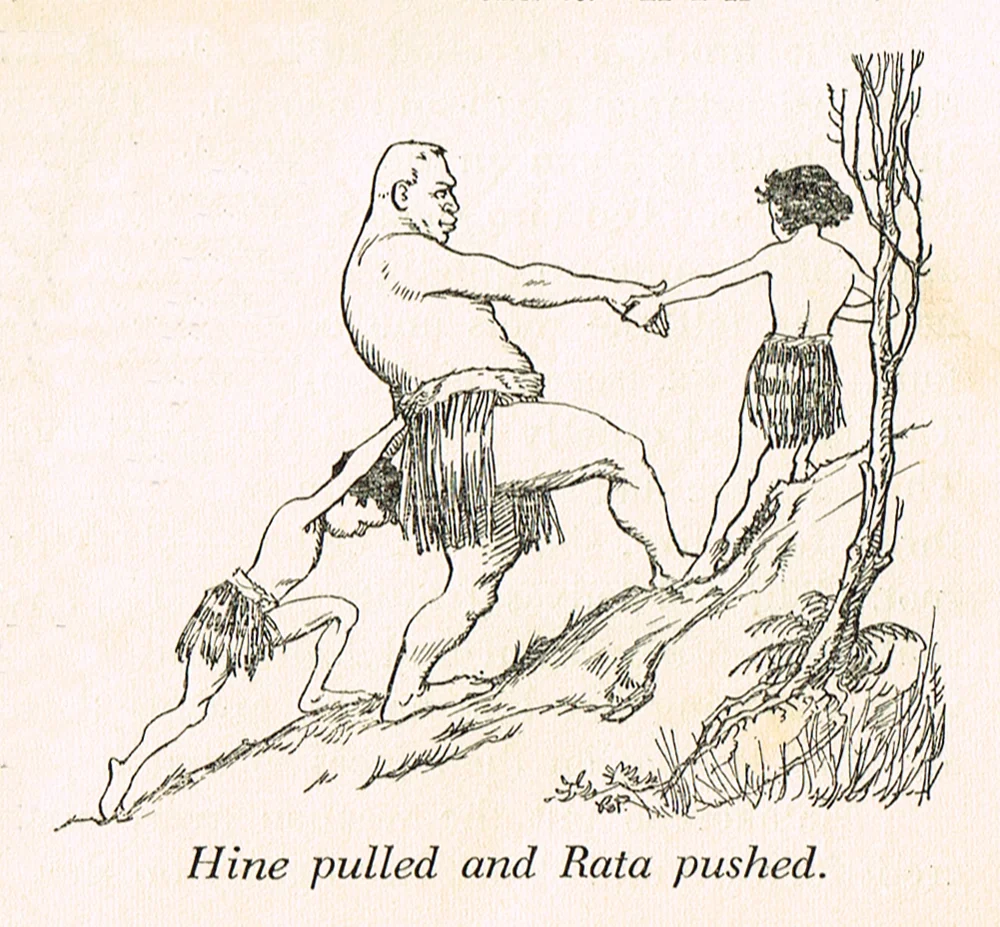
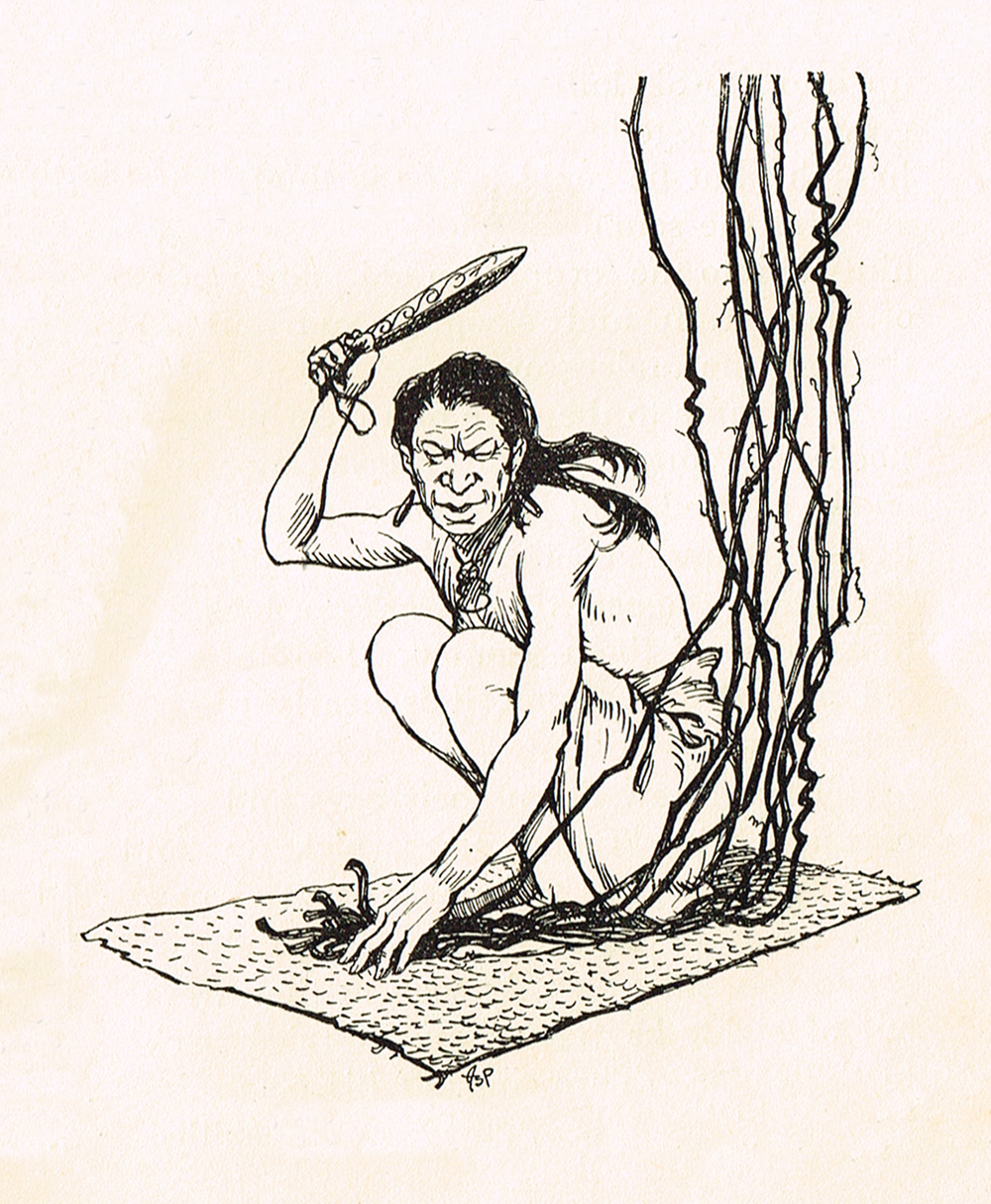
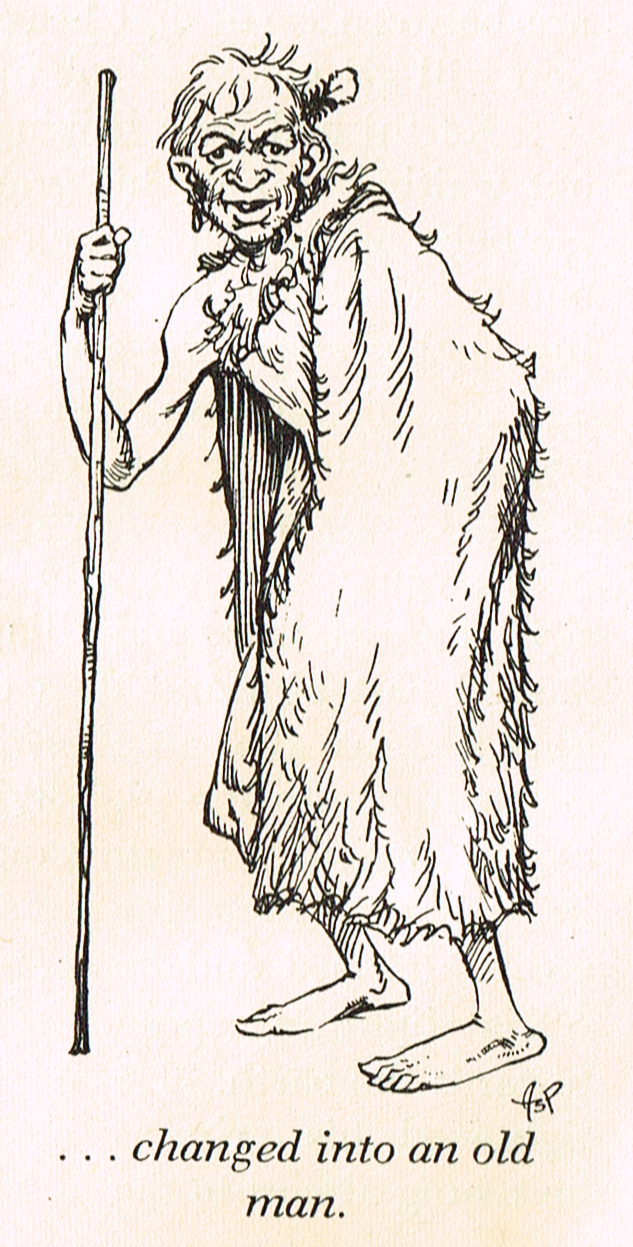
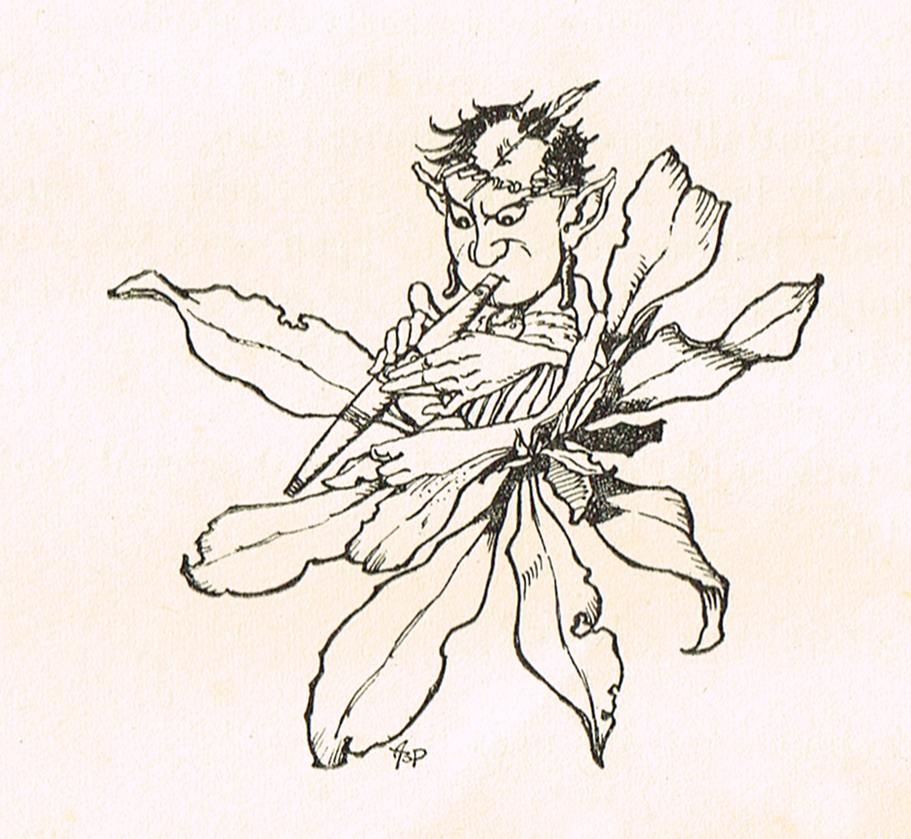
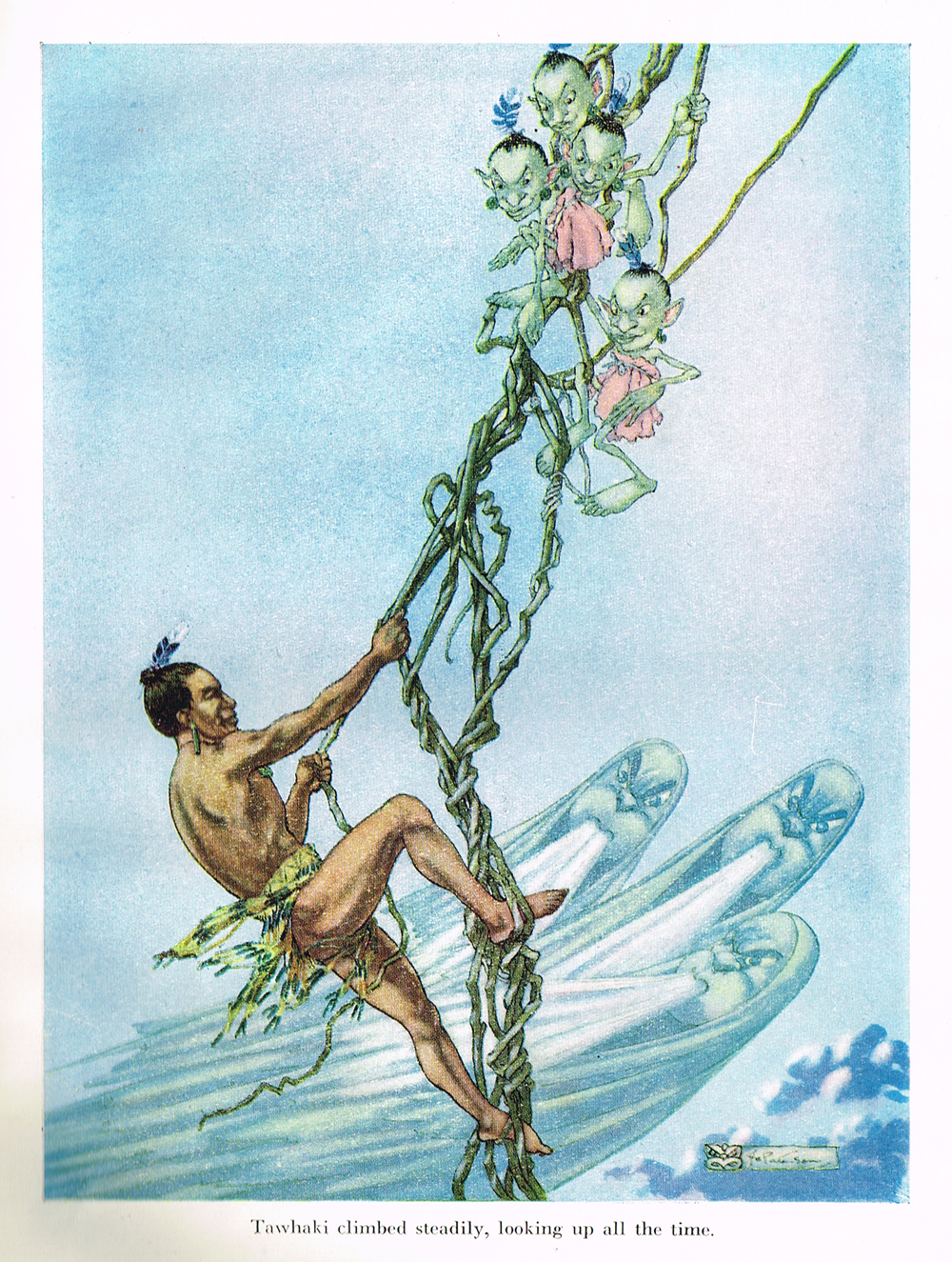
Wonder Tales of Maoriland - A. S. Paterson

One of New Zealand's most prolific cartoonists of the early 20th century, A. S. Paterson produced an almost unbroken 25 year run of daily strips for the Dominion newspaper and provided illustrations for many magazines, advertisements and books. Wonder Tales of Maoriland written by publisher A. W. Reed included many examples of Paterson's black and white line work and some striking full page water colour illustrations.

A. S. Paterson biographical notes.

Comics Art Workshop: Pat Grant Interview Part One

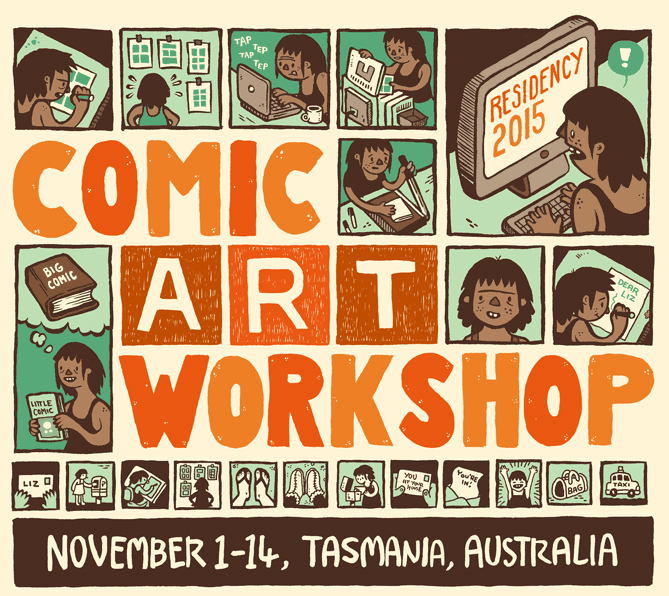
The inaugural Australian Comic Art Workshop was announced early this year, an opportunity for developing cartoonists to receive instruction from professionals during a full immersion workshop. I like the idea that cartoonists down this end of the world will be able to benefit from this sort of tuition and hope this is the start of a larger comics education initiative combining comics academics and pencil and paper tutors.

Deadline for applications for the first workshop is May 29th 2015.

From the Comics Art Workshop website,

'We're here to incubate a new generation of world class comics.'

I asked one of the facilitators and tutors of the Comics Art Workshop Pat Grant a few questions.

Matt Emery: I really like the idea of a comics art workshop, offering instruction and mentorship outside of what may be available in tertiary education (actually I don't know what is offered in this country, I presume there are no dedicated cartooning papers?). I know you attended a comic workshop in Florida a few years back, I wondered going into that, what did you hope to get out of it? And what did you end up taking away from it?

Pat Grant: The embarrassing truth is that The Comic Art Workshop hasn't come about because of some benevolent impulse. I'm personally doing this for selfish reasons. I'm having a terrible time with my current project and I wish so hard that there was a place I could go every year to get the a useful critique and technical support to help with my graphic novel. I want the support that screenwriters and novelists seem to be able to get.

For years I've been thinking through the role of education in comics. I have been asking myself: If there was a place where someone like me could go to develop as a cartoonist then what would that place look like?

I went to a residency run by the Atlantic Centre for The Arts in Florida in 2010. It was 24 cartoonists in the middle of nowhere with some impressive mentors like Craig Thompson and Paul Pope, and we're all doing our very best to figure out how to make better comics. It was immersive and intense. Without a doubt the most important educational experience of my life. But here's the really important thing, there was no 'curriculum', there was no 'teaching'. It turns out that all you have to do to create the ultimate comics school is to get a group of talented cartoonists as somewhere remote and make sure they're well fed. The rest they'll figure out for themselves.

Liz and I are amongst the few people in this country lucky enough to be able to teach comics at a tertiary level. It's great to be able to work in the education side of the field and meet some up and coming comix ninjas but, and I'm only speaking for myself here, working for a university is more often heartbreaking than it is inspiring. My feeling is that universities are actually very limited in what they can offer to any talented artist. If you really want to create a space for advanced learning in our art-form then you probably have to forget the university and build something from the ground up. That's what we're trying to do.

Emery: What inspired the setting of Tasmania for the workshop?

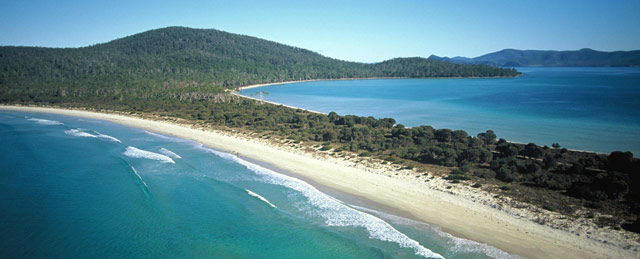
Grant: We picked Maria Island in Tasmania because the place is remote, affordable and unbelievably beautiful. I went down for a reccie last year and I just can;t wait to get back there. It's the ideal place to spend two weeks drawing, talking, reading, eating good food and drinking the odd tumbler of Tasmanian whiskey. I've always found arts events and festivals that are held in major cities to be droll. People turn up for the day have 37 shallow interactions and are back in their routine before bed. There'll be none of that at CAW. Real discussions about art practices and art projects need serious time and a relaxed space to properly unfold and my hope is that our choice of venue creates the right conditions.

But it's not always gonna be in Tas. The coolest thing about the CAW project design is that we don't have a building and that we're not tied down to any given place. Our next workshop might be in Central Australia or South Island New Zealand or by the beach in Indonesia.